0
0

Vitamin C Serum Ingredients Explained: What Actually Works for Your Skin

Selecting the correct vitamin C serum can experience  complicated due to multiple products assuring glowing and flawless skin. However, the actual secrecy beyond efficient skincare lies in the ingredients and composition of the product. Comprehending vitamin C serum ingredients is important if you need brighter, convenient and more radiant skin.

Using top-notch skincare products with cautiously selected elements can assist in targeting common skin issues without leading to unneeded discomfort. By acquiring knowledge about the components inside a serum, you can create clever skincare options that genuinely value your skin.

Why Vitamin C Serum Ingredients Matter

The efficiency of a vitamin C serum relies on the type of vitamin C used and the backing ingredients involved in the formula. Many individuals only concentrate on the brand name, but the genuine formulation establishes whether the serum will enhance dullness, pigmentation, and irregular skin structure.

Multiple types of vitamin C function distinctly on the skin. Some are extremely potent while others are softer for sensitive skin types. A balanced serum merges antioxidants, hydrators and soothing components to provide the highest advantages while reducing irritation.

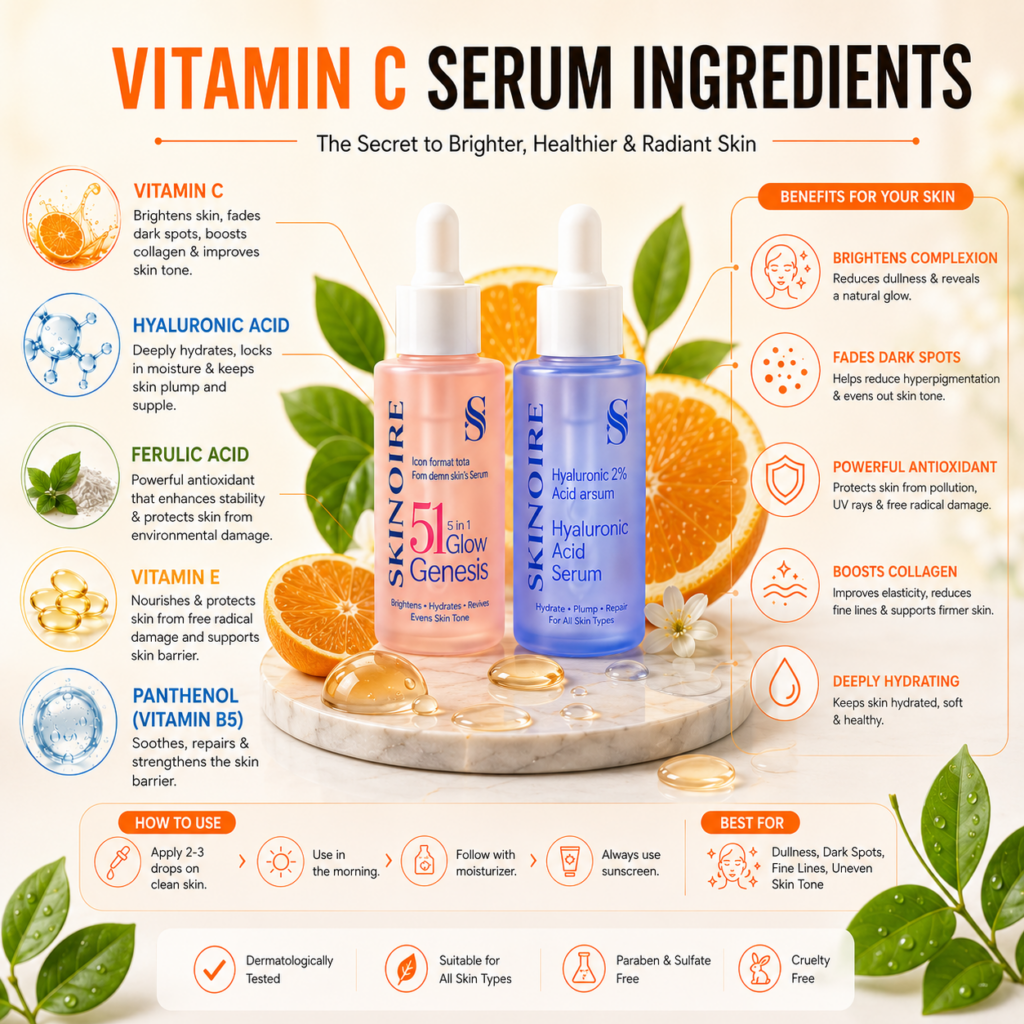
The Most Effective Forms of Vitamin C

Ascorbic Acid

Ascorbic acid, also known as L-ascorbic acid, is the cleanest and most energetic version of vitamin C. It assists lighten the skin, minimizes dark spots and strengthen collagen production. Most efficient serums hold a concentration among 10% and 20%, which is regarded as secure and advantageous for most skin types

Sodium Ascorbyl Phosphate

This is a more steady and soft form of vitamin C that functions well for delicate or acne-prone skin. It assists lessen irritation while strengthening skin tone slowly.

Ascorbyl Glucoside

Ascorbyl glucoside is another mild derivative that gives antioxidant shield and enables improve skin radiance free of causing dryness or irritation..

Supporting Ingredients That Improve Results

A Top-notch vitamin C serum does not lean on vitamin C alone. Furthermore components upgrade stability, hydration and absorption for more effective overall functioning.

Hyaluronic Acid

Hyaluronic acid is well-known for its profound hydrating characteristics. It lets the skin keep moisture and minimize the look of fine lines caused by dehydration. If you need additional hydration among with brightening advantages, you can look into the advantages of hyaluronic acid as segment of your skincare habit.

Ferulic Acid

Ferulic acid is a energetic antioxidant that expands the strengths of vitamin C and assists safe the skin towards environmental destruction lead by pollution and UV exposure.

Vitamin E

Vitamin E functions together with vitamin C to give powerful antioxidant safeguard. This alignment enables skin softness and supports the skin barrier.

Panthenol

Panthenol, also common as vitamin B5, lets soothe irritated skin and encourages the skin’s natural healing process.

How Vitamin C Serum Benefits the Skin

The accurate combination of vitamin C serum ingredients can maximize numerous skin challenges at the similar time. Vitamin C is primarily established for glowing the complexion and lowering  hyperpigmentation, but its advantages go far beyond that.

Vitamin C neutralizes free radicals that destroy collagen and fasten premature aging. It also supports collagen production, which keeps skin elasticity and firmness. Daily usage might lessen the appearance of wrinkles, acne marks and uneven skin tone.

Many users also observed smoother texture and a healthier glow after regularly using vitamin C serum. If you want to discover more regarding acquiring radiant skin, must go through vitamin C serum benefits for glowing skin

How To Choose The Right Vitamin C Serum

Not every serum is for every skin type. Selecting the right formulation relies on your skin issues and sensitivity level.

For Sensitive Skin

Look for gentle vitamin C derivatives like sodium ascorbyl phosphate or ascorbyl glucoside. Lower concentrations are genrally secured for sensitive skin

For Oily Skin

Lightweight and non-greasy formulas work fines for oily skin types. Components such as niacinamide and vitamin C can control excess oil while glowing the complexion.

For Dry Skin

Dry skin benefits from hydrating components like hyaluronic acid and panthenol. Merging vitamin C with moisturizing ingredients lets us prevent dryness and irritation. You can also discover multiple hydrating serums to enhance moisture retention and maintain healthy skin.

Common Mistakes When Using Vitamin C Serum

One of the biggest mistakes people make is using extremely high concentrations without considering their skin type. Higher percentages are not always better and may cause redness or sensitivity.

Another mistake is storing the serum incorrectly. Vitamin C can lose effectiveness when exposed to sunlight and air. Dark glass bottles with airtight droppers help preserve the stability of the formula.

Using too many active ingredients together can also irritate the skin. It is important to introduce vitamin C gradually and monitor how your skin responds.

Final Thoughts

Understanding vitamin C serum ingredients can help you choose products that actually deliver visible results instead of relying on marketing claims alone. A well-formulated serum containing effective vitamin C derivatives, antioxidants and hydrating ingredients can improve dullness, uneven texture and early signs of aging while supporting healthier skin overall.

Whether your goal is brighter skin, hydration or reducing dark spots, selecting the right formulation based on your skin type is essential. Consistent use of quality skincare products combined with a balanced skincare routine can help you achieve smoother, healthier and naturally glowing skin over time.

FAQS - Vitamin C Serum Ingredients

Q1: What are the key ingredients in a vitamin C serum?

The key ingredients in a vitamin C serum include L-ascorbic acid, vitamin E, ferulic acid, hyaluronic acid, and panthenol. These ingredients work together to brighten skin, improve hydration, and protect against free radical damage.

Q2: Which form of vitamin C is best for skin?

L-ascorbic acid is the most effective form of vitamin C for skin brightening and anti-aging. However, gentler forms like sodium ascorbyl phosphate and ascorbyl glucoside are better for sensitive skin types.

Q3: How does vitamin C serum work on the skin?

Vitamin C serum works by neutralizing free radicals, boosting collagen production, and reducing melanin formation. This helps improve skin texture, reduce dark spots, and give a brighter, more even complexion.

Q4: What ingredients should be avoided in vitamin C serum?

Avoid serums with high levels of alcohol, artificial fragrance, and unstable vitamin C formulas. These can cause irritation and reduce the effectiveness of the serum over time.

Start typing and hit Enter

Great to have you back!

0