
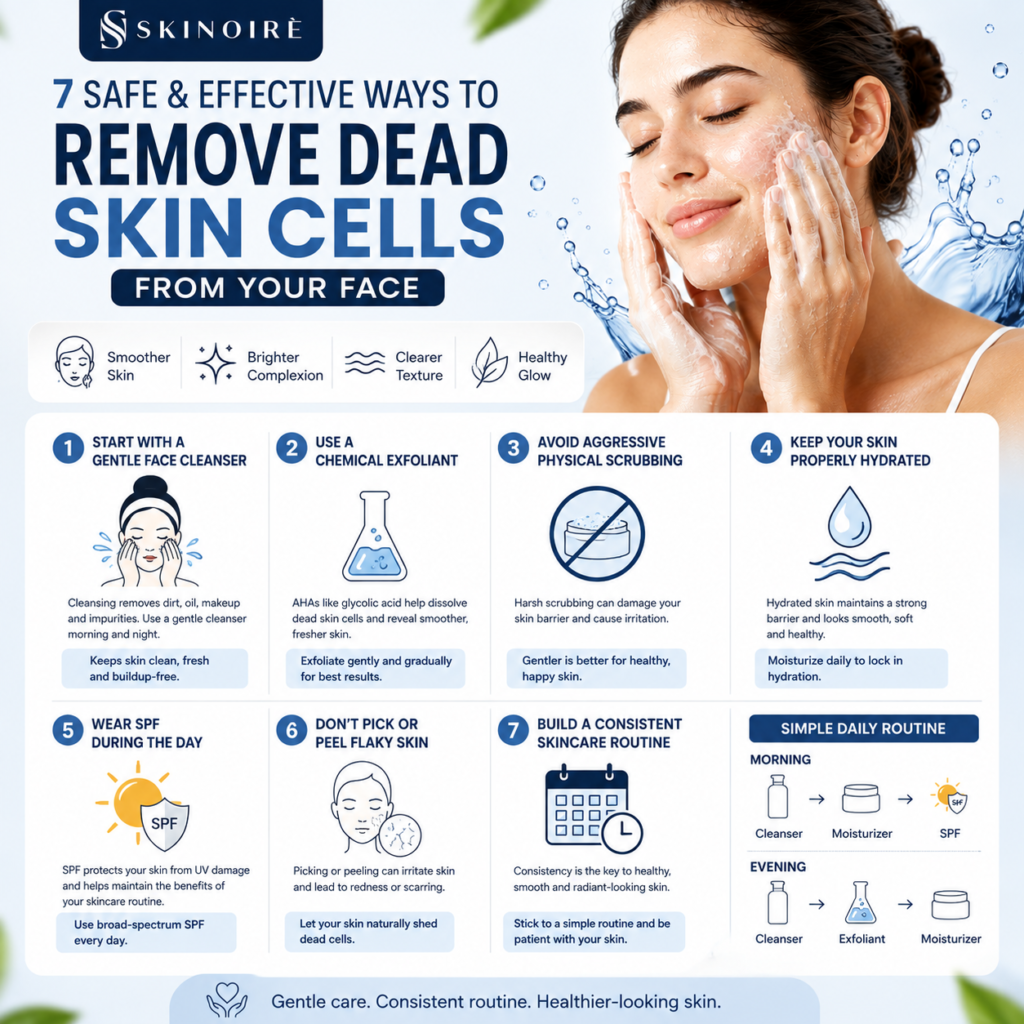
7 Safe & Effective Ways To Remove Dead Skin Cells From Face
Your skin naturally sheds old cells as part of its renewal process, but sometimes dead cells can build up on the surface and leave your complexion appearing dull, rough, or uneven. If you are wondering how to remove dead skin cells from your face, gently exfoliate while keeping your skin hydrated and protected. A consistent skincare routine can assist in improving skin texture without any reason to irritate the skin.
Unlike harsh scrubbing methods, a balanced approach merges cleansing, gentle exfoliation, hydration, and sun protection. Here are seven practical methods to help remove dead skin buildup and keep smoother, healthier-looking skin.
1. Start With a Gentle Face Cleanser
Cleansing is a crucial initial step in keeping your skin free from excess oil, dirt, sunscreen, makeup, and environmental impurities. These substances can gather on the skin over the day and make your skin tone appear less fresh.
Use a gentle face cleanser in the morning and evening as per your to your skin’s requirements. Avoid washing your face continuously or applying extremely hot water, as these habits might leave your skin appearing dry and uncomfortable.
A cleanser such as Skinoire’s Nourish Nectar Face Wash can be integrated into a simple daily cleansing routine. If you prefer an oil-to-foam formula, Soothe And Smooth Oil-to-Foam Cleanser can also be used to help cleanse away daily buildup.
2. Use a Chemical Exfoliant
Chemical exfoliation can be an efficient way to loosen dead cells from the surface of the skin. Ingredients like glycolic acid, an alpha hydroxy acid (AHA), work by assisting in dissolving the bonds between older surface cells so they can be shed more easily.
If you are new to chemical exfoliation, start gradually and follow the product’s directions. Using excessive exfoliating product or applying it too rapidly can lead to dryness, redness, or irritation.
Skinoire’s Revitaletix Glycolic Toner can be considered as part of an exfoliating skincare routine. Introduce exfoliating products slowly, specifically if your skin is sensitive or you already applies other active ingredients.
3. Avoid Aggressive Physical Scrubbing
Many homemade remedies suggest applying ingredients like sugar, coffee grounds, salt, or other rough particles to scrub away dead skin. However, vigorous rubbing can annoy the skin and might damage its protective barrier.
When exfoliating, gentler is better. Avoid using too much pressure or scrubbing your face until it feels tight or uncomfortable. Your objective must be to support natural skin revival instead of forcefully removing every surface cell.
If your skin becomes red, painful, unusually dry, or irritated after exfoliation, reduce the frequency or stop the exfoliating product until your skin feels comfortable again.
4. Keep Your Skin Properly Hydrated
Hydration plays an important role in maintaining a healthy-looking skin barrier. When skin becomes excessively dry, it may feel rough, tight, or flaky, making dead skin buildup more noticeable.
After cleansing or exfoliating, apply a suitable moisturizer to help maintain comfortable, hydrated skin. Look for a moisturizer that suits your skin type and fits easily into your inconsistent routine.
Skinoire’s Velvet Vitality Brightening Moisturizer can be incorporated into a daily skincare routine when you need to moisturize while helping achieve a brighter, smoother-looking complexion.
5. Wear SPF During the Day
Sun protection is crucial, especially when exfoliating ingredients are part of your skincare routine. UV exposure can lead to premature skin aging, uneven-looking skin tone, and other visible changes in the complexion.
Apply a broad-spectrum sunscreen or SPF product during the daytime and reapply as suggested, specifically when using extended periods outdoors.
For a convenient skincare step, Golden Glint SPF Plus Moisturizer combines moisturizing care with sun protection. Consistent SPF use can help protect the benefits of your skincare routine and support healthier-looking skin over time
6. Don't Pick or Peel Flaky Skin
When you notice visible flakes or rough patches, it can be tempting to pick, scratch, or peel them away. This can irritate the skin and potentially lead to redness or discomfort.
Instead, focus on gentle cleansing, hydration, and appropriate exfoliation. Give your skin time to naturally shed older cells rather than trying to remove them manually.
A consistent routine is usually more beneficial than repeatedly using strong treatments whenever your skin appears dull.
7. Build a Consistent Skincare Routine
Knowing how to remove dead skin cells from your face is only a single part of keeping smoother-looking skin. Your overall routine is also important.
A simple routine can include:
Morning:
Cleanser → Moisturizer → SPF
Evening:
Cleanser → Appropriate exfoliating product → Moisturizer
You do not necessarily require multiple products to preserve your skin. Going for products according to your skin type and introducing active ingredients gradually can make your routine simpler to follow.
If you feel that your current routine is not giving you the outcomes you expect, understanding why your skincare routine is not working can help you understand common mistakes and make more informed changes.
How Often Should You Exfoliate Your Face?
There is no single exfoliation schedule that works for everyone. Your perfect frequency depends on your skin type, the exfoliating ingredient you use, and how your skin responds.
If you are beginning with a chemical exfoliant, using it less frequently and gradually increasing use according to the product instructions can be a sensible approach. Sensitive or easily irritated skin may require less frequent exfoliation.
Avoid combining several strong exfoliating products at once unless you know that your skin can tolerate them. More exfoliation does not necessarily mean better results.
Signs You May Be Over-Exfoliating
Exfoliation should not leave your skin feeling painful or severely irritated. Watch for signs such as:
- Persistent redness
- Burning or stinging
- Excessive dryness
- Tight or uncomfortable skin
- Increased sensitivity
- Peeling or irritation
If these symptoms appear, simplify your routine and give your skin time to recover. A gentle approach is especially important when using active ingredients.

Can Exfoliation Help With Dull-Looking Skin?
Yes, appropriate exfoliation can help remove accumulated surface cells and show fresher-looking skin underneath. This might make the complexion appear smoother and more radiant.
However, exfoliation is not a solution for every skin issue. If you have persistent acne, severe irritation, pigmentation, or another ongoing skin complication, consider speaking with a qualified dermatologist before using multiple active products.
For concerns related to visible symptoms of aging, you can also explore anti-aging serums in Pakistan and learn how targeted ingredients can enhance a wider skincare routine.
FAQs - How to Remove Dead Skin Cells From Your Face
1. How do I remove dead skin cells from my face?
Gentle cleansing, appropriate exfoliation, regular moisturizing, and daily SPF can help remove surface buildup and keep your skin smoother.
2. How often should I exfoliate my face?
It depends on your skin type and the exfoliating product. Start slowly and follow the product instructions to avoid over-exfoliation and irritation.
3. Is exfoliation good for removing dead skin cells?
Yes. Gentle physical or chemical exfoliation can help loosen and remove dead surface cells, improving the appearance of dull and rough skin.
4. Can I remove dead skin cells naturally at home?
Yes, but avoid harsh DIY scrubs or vigorous rubbing. Gentle cleansing, hydration, and carefully chosen exfoliation are safer approaches for facial skin.
5. What should I apply after removing dead skin cells?
Apply a suitable moisturizer to support skin hydration, and use SPF during the day to protect your skin from UV exposure.
Final Thoughts
Learning how to remove dead skin cells from the face does not mean using harsh scrubs or exfoliating every day. The safest approach is to support your skin with regular cleansing, gentle exfoliation, adequate hydration, and daily sun protection.
Start with a simple routine, introduce active ingredients gradually, and pay attention to how your skin responds. With consistent care and suitable products, you can help maintain a smoother, fresher, and healthier-looking complexion.