What Is The Difference Between Cleanser And Face Wash
If you have ever felt confused while choosing between a cleanser and a face wash, you are not alone. Both sit in the same skincare aisle, both claim to clean skin, and both look similar in bottles. Still, they behave very differently on the skin.
Knowing what is the difference between cleanser and face wash helps you stop guessing and start choosing what actually suits your skin. Once you understand how each one works, skincare feels less confusing and more natural.
What is a cleanser?
A cleanser works by gently lifting dirt, oil, sunscreen, and makeup from the surface of the skin. Instead of scrubbing oil away, it softens and loosens it so water can rinse it off easily.
Most cleansers feel creamy, milky, or gel-like. They produce little to no foam because they rely on mild cleansing agents. This matters because skin needs some oil to stay comfortable. When too much oil is removed, skin may feel tight or irritated later.
Cleansers suit dry skin, sensitive skin, and skin that feels tight after washing. They also fit morning routines well because overnight skin mainly carries light oil and sweat, not heavy dirt. Another point many people notice is that cleansers remove sunscreen evenly, which helps avoid leftover residue around the hairline and nose.
Check out our blog: What Is Double Cleansing? Benefits and How to Do It Correctly
What is a face wash?
A face wash focuses on cleaning oil and buildup from pores. It uses cleansing agents that mix with oil and water, then rinse everything away. This is why face washes usually foam when water is added.
Face washes work well for oily skin and acne-prone skin. They are commonly used at night because skin collects sweat, pollution, and sunscreen during the day. After washing, skin feels fresh and oil-free.
If dryness or tightness appears later, the face wash may be too strong or used too frequently. Face washes work best when matched with skin type and daily activity level.
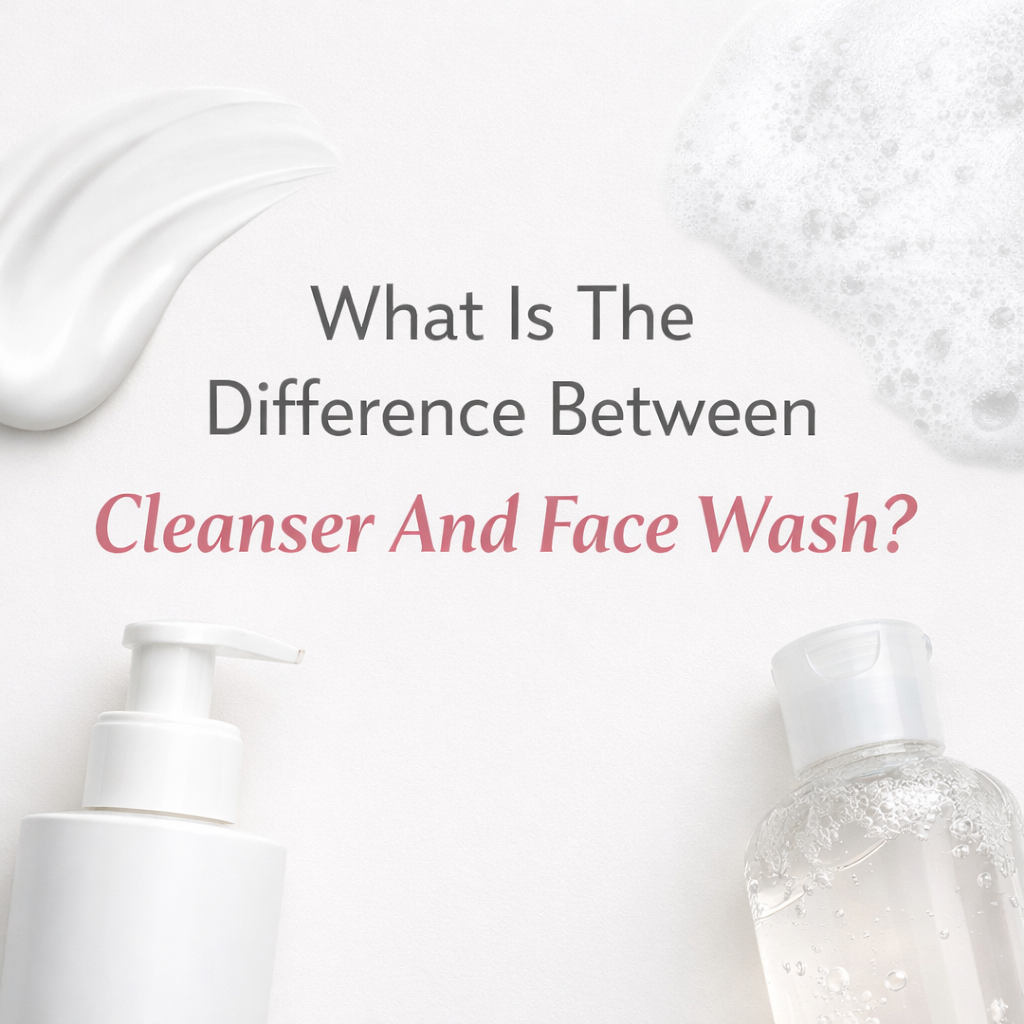
What is the difference between cleanser and face wash
The difference between cleanser and face wash becomes clear when looking at how they clean, when they should be used, and how skin reacts afterward.
How each product cleans the skin
Cleansers loosen dirt and oil while keeping the skin surface comfortable. Face washes remove oil and impurities from pores using foaming action. Both clean skin, but the depth and strength differ.
How skin feels after washing
After a cleanser, skin usually feels soft and calm. After a face wash, skin feels clean and refreshed. A tight feeling later signals that skin oils were removed faster than skin could rebalance.
How skin type affects the choice
Dry skin responds better to cleansers because moisture stays protected. Oily skin responds better to face wash because oil buildup clears more easily. Combination skin often responds well to cleanser in the morning and face wash at night. Sensitive skin usually stays calmer with cleansers.
When to use cleanser or face wash
Cleansers fit morning routines and gentle night routines. Face washes fit night routines after outdoor exposure, sweating, or long sunscreen wear. Activity level during the day often decides which one works better.
Using cleanser and face wash together
Using both works well when done in the right order. At night, cleanser can remove sunscreen and surface oil first. Face wash can follow to clean pores. In the morning, cleanser alone is usually enough.
Why texture gives better clues than labels
Texture often reveals how strong a product feels on skin. Gel cleansers feel light and gentle. Cream cleansers suit dryness. Foaming face washes vary in strength based on formulation. Skin comfort after thirty minutes matters more than how clean skin feels right away.
What happens when the wrong product is used
Frequent use of strong face washes can weaken the skin barrier. This may lead to dryness, redness, and oil imbalance. Using only a cleanser when deeper cleaning is needed can leave oil inside pores, which may cause dull skin or breakouts.
Final Thoughts
Cleansing sets the tone for how your skin behaves through the day. When you use the right product, skin feels comfortable, looks clearer, and responds better to everything that comes next. A routine built around proper cleansing keeps oil in check, helps prevent clogged pores, and supports healthy texture over time.
If you are ready to simplify your routine, Skinoire offers thoughtfully made cleansers designed for everyday skin. Each formula focuses on gentle cleaning that respects skin balance. Find the one that fits your skin type and let your routine work the way it should.
FAQs
Can using both cleanser and face wash damage the skin
Using both does not damage the skin when timing and order are correct. Cleanser helps remove surface buildup like sunscreen and makeup, while face wash clears oil from pores. Problems usually appear when both are used too often or when formulas are too strong for the skin type.
How long should cleanser or face wash stay on the skin
Cleansing products only need about thirty to sixty seconds to work. Rubbing longer does not improve cleaning and may irritate the skin. Gentle massage followed by proper rinsing gives better results than extended washing.
Should cleanser or face wash be changed with seasons
Skin needs often change with weather. In colder or drier months, cleanser feels more comfortable as skin loses moisture faster. In hot or humid weather, face wash helps manage oil and sweat better. Adjusting products seasonally helps maintain balance.
Is water temperature important when washing the face
Water temperature affects how skin reacts after cleansing. Lukewarm water works best because it helps cleanse without stripping oils. Hot water can increase dryness, while cold water may not remove oil properly.
Can cleanser or face wash affect how serums and moisturizers work
Cleansing directly affects how well skincare absorbs. When skin is properly cleaned, serums spread evenly and moisturizers seal hydration better. Poor cleansing can block absorption or cause uneven results.
Why does skin feel oily soon after washing sometimes
Skin often feels oily again when cleansing removes too much natural oil. The skin responds by producing more oil to restore balance. This usually happens with strong face washes or frequent washing.
Is it okay to skip cleansing once in a while
Skipping cleansing occasionally does not harm healthy skin, especially on low-activity days. Skin benefits from rest when it feels dry or sensitive. Cleansing should support the skin, not stress it.