0
0

How to Choose the Right Face Serum for Your Skin Type (2026)

Choosing the perfect face serum can entirely evolve your skincare routine, but selecting the incorrect one might lead to dryness, irritation, or breakouts. If you’re wondering how to choose the right face serum, you’re not alone. Every skin type has unique needs, and understanding those needs is the first step toward healthier, glowing skin. Whether you have dry, oily, combination, or sensitive skin, the right serum gives targeted ingredients that nourish your skin and enhances its overall appearance.

Unlike moisturizers, serums have concentrated active ingredients that penetrate deeply into the skin, making them an essential part of a skincare routine.

What Is a Face Serum?

A face serum is a lightweight skincare product formulated with strongest active ingredients to target specific skin concerns. Relying on the formula, serums can hydrate, brighten, removes dark spots, improve skin texture, lower fine lines, or increases the skin barrier.

If you want to choose the right face serum, start by knowing your skin type and the concern you want to treat rather than  buying products based only on trends.

Step 1: Understand Your Skin Type

Knowing your skin type helps you select ingredients that work effectively without causing irritation.

Dry Skin

Dry skin lacks moisture and usually feels tight or flaky. seek for serums containing:

  • Hyaluronic Acid
  • Glycerin
  • Ceramides
  • Panthenol

These ingredients attract and retain moisture while improving the skin barrier.

If your skin feels dehydrated, Hyaluronic 2% Acid Serum gives long-lasting hydration and helps maintain soft, healthy-looking skin.

Oily Skin

Oily skin produces excess sebum that may clog pores.

Choose ingredients such as:

  • Niacinamide
  • Zinc
  • Salicylic Acid
  • Green Tea Extract

These ingredients help maintain oil production without stripping the skin of essential moisture.

Combination Skin

Combination skin has oily areas around the T-zone and dry cheeks.

A lightweight serum containing:

  • Vitamin C
  • Peptides
  • Hyaluronic Acid

works well because it hydrates without feeling heavy.

Sensitive Skin

Sensitive skin needs gentle formulations with less irritating ingredients.

Look for:

  • Aloe Vera
  • Centella Asiatica
  • Hyaluronic Acid
  • Panthenol

Avoid heavily fragranced products and must perform a patch test before using any new serum.

Step 2: Choose a Serum Based on Your Skin Concern

Once you get aware of your skin type, the next stage is selecting ingredients that target your biggest issue.

Dull Skin

If your complexion looks tired or uneven, Vitamin C and Niacinamide are best choices.

These ingredients help brighten skin, enhance radiance, and reduce the appearance of pigmentation by the passage of time.

The 5 in 1 Glow Genesis Serum combines Vitamin C, Niacinamide, and Peptides to increase skin tone while supporting hydration and firmness.

Dehydrated Skin

Dehydrated skin requires water rather than oil.

Hyaluronic Acid attracts moisture into the skin, leaving it plump and smooth all over the day.

If you’d like to understand why this ingredient is so popular, read our guide the benefits of Hyaluronic Acid Serum.

Fine Lines and Early Signs of Aging

As collagen production naturally slows, skin begins to lose firmness.

Look for ingredients like:

  • Peptides
  • Vitamin C
  • Hyaluronic Acid

These support smoother, firmer-appearing skin while increasing elasticity.

For a detailed buying guide, explore our article the best anti-aging serum in Pakistan.

Step 3: Check the Ingredient List

Many individuals purchase serums based on marketing claims rather than ingredients.

Before buying, go through the label carefully.


Skin Concern

Recommended Ingredients

Dry Skin

Hyaluronic Acid, Ceramides

Oily Skin

Niacinamide, Zinc

Pigmentation

Vitamin C, Niacinamide

Fine Lines

Peptides, Vitamin C

Sensitive Skin

Panthenol, Aloe Vera

Understanding ingredients makes it much easier to choose the right face serum that delivers real results instead of temporary improvements.

Step 4: Consider the Texture

Texture concerns more than many people realize.

  • Water-based serums suit oily and combination skin.
  • Slightly richer formulas are better for dry skin.
  • Lightweight gels absorb rapidly and layer best under sunscreen or moisturizer.

select a texture that feels comfortable enough for daily use.

Step 5: Patch Test Every New Serum

Even the best skincare products can cause irritation if your skin is sensitive.

Before applying a new serum to your entire face:

  • Apply a small amount behind your ear or on your inner arm.
  • Wait 24 hours.
  • If redness or irritation appears, discontinue use.

Patch experimenting reduces the risk of unexpected reactions.

Step 6: Apply Your Serum Correctly

Using the correct application technique helps maximize results.

Follow these simple steps:

  1. Cleanse your face thoroughly.
  2. Apply toner if you use one.
  3. Apply 2–3 drops of serum to slightly damp skin.
  4. Gently press the serum into your skin.
  5. Finish with a moisturizer.
  6. During the day, always apply sunscreen as the final step.

Consistency is more important than using large amounts of product.

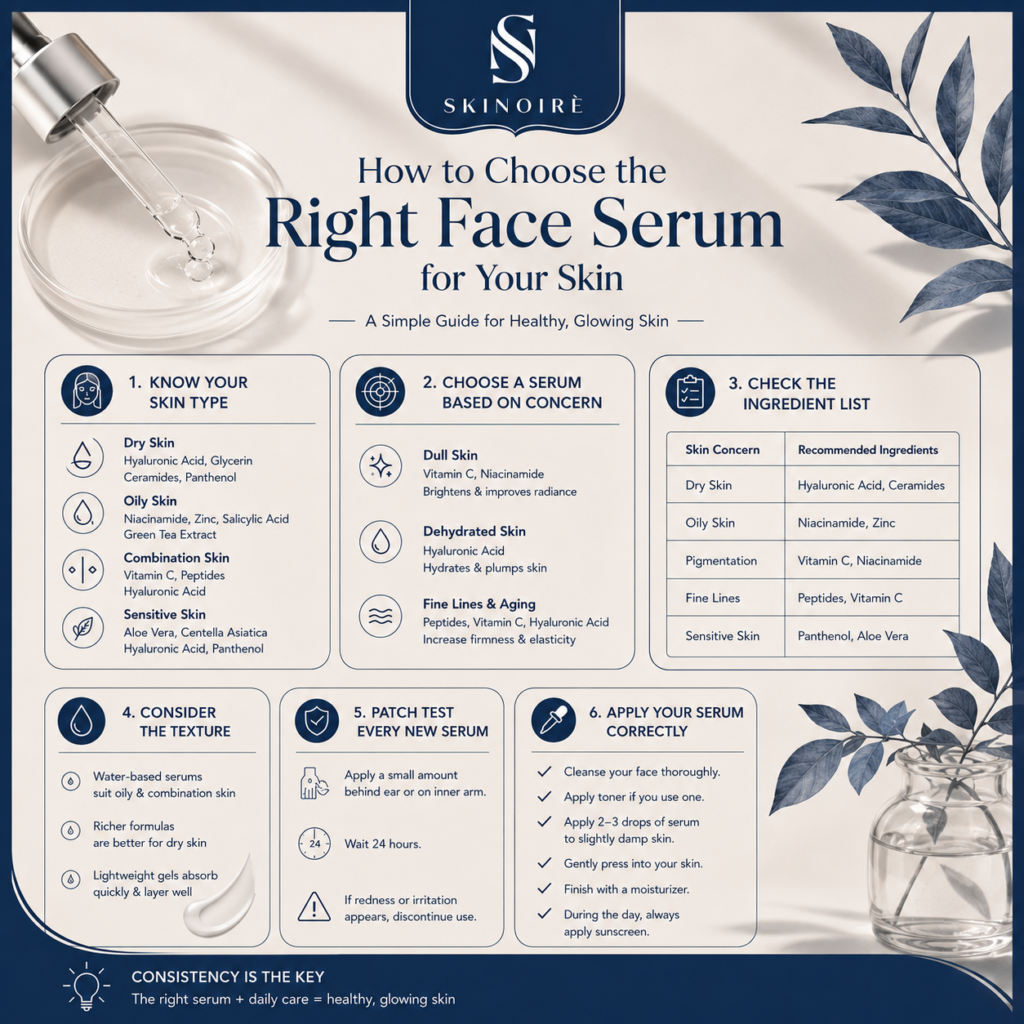
Skinoire infographic explaining how to choose the right face serum based on skin type, concerns, and key skincare ingredients.

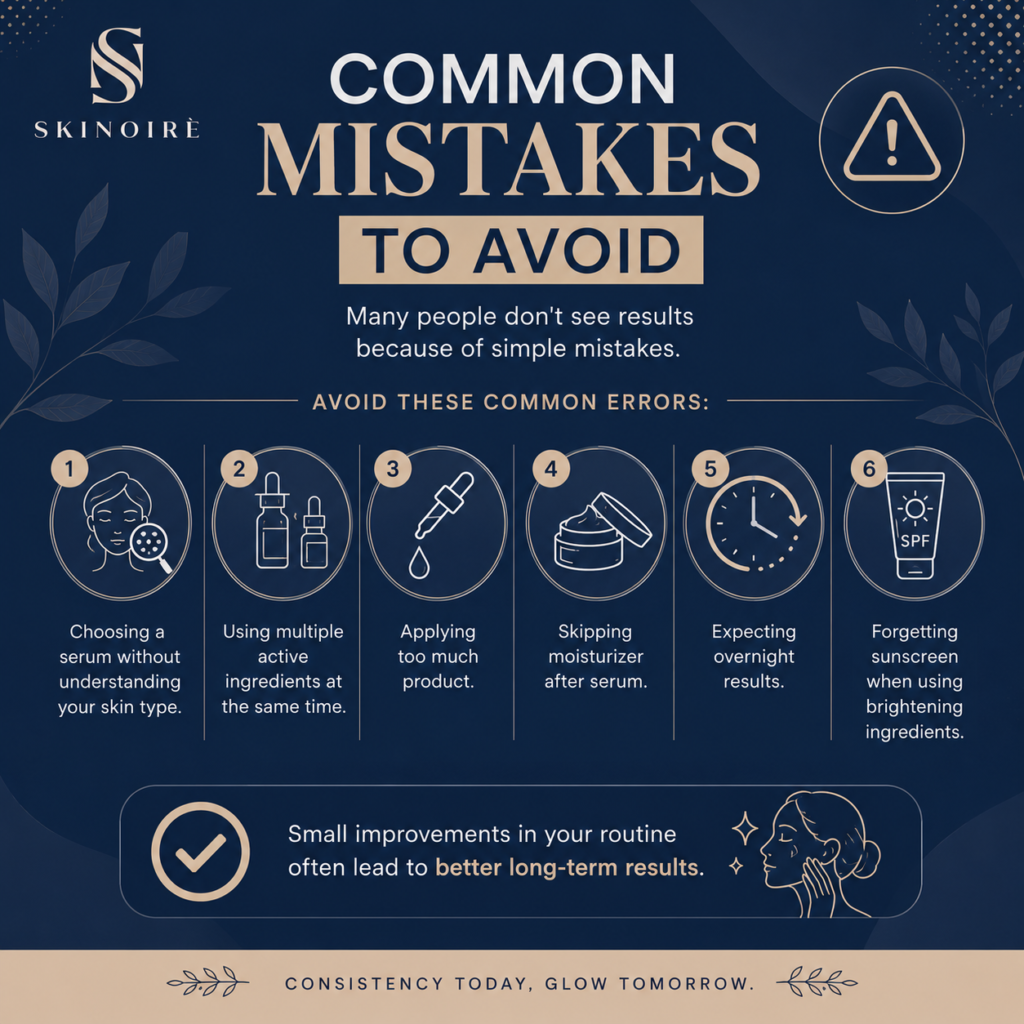
Common Mistakes to Avoid

Many people don’t get desired results because of simple mistakes.

Avoid these common errors:

  • Choosing a serum without understanding your skin type.
  • Using multiple active ingredients at the same time.
  • Applying excessive product.
  • Skipping moisturizer after serum.
  • Expecting overnight outcomes.
  • Ignoring sunscreen when applying brightening ingredients.

Tiny improvements in your routine usually lead to better sustainable results.

Common skincare mistakes to avoid when using face serum

Frequently Asked Questions

Can I use a face serum every day?

Yes. Most hydrating and brightening serums are suitable for daily use. Always follow the product instructions..

How many drops of serum should I use?

Usually 2–3 drops are enough for your entire face.

Should I apply serum before or after moisturizer?

Always apply serum before moisturizer so the active ingredients can absorb properly.

How long does it take to see results?

Hydrating serums may show results within a few days, while brightening or anti-aging serums often require 4–8 weeks of consistent use.

Conclusion

Learning how to choose the right face serum doesn’t have to be complicated. By understanding your skin type, identifying your primary concern, and selecting ingredients that match your needs, you can build a skincare routine that delivers noticeable results over time. Whether your goal is deep hydration, brighter skin, or smoother texture, choosing the right serum and using it consistently will help you achieve healthier, more radiant skin.

Start typing and hit Enter

Great to have you back!

0