
When it comes to choosing the right skincare ingredients, Vitamin C vs Niacinamide is one of the most common comparisons people usually make. Both ingredients are dermatologist-favorite actives that help improve skin health, but they function in different ways. Whether your aim is brighter skin, fewer dark spots, better hydration, or a stronger skin barrier, understanding the differences can help you build a more efficient skincare routine.
In this guide, we’ll compare Vitamin C and Niacinamide by following this approach, which will lead you to the best skincare products, explain their unique benefits, discuss whether you can use them together, and help you decide which ingredient best suits your skin type.
Vitamin C is the strongest antioxidant that protects the skin from environmental damage while enhancing overall brightness and skin tone. It helps lower pigmentation, supports collagen production, and gives the skin a healthier, more radiant appearance.
Some of the largest benefits of Vitamin C include:
Vitamin C is largely recognized for improving skin brightness, lowering pigmentation, and supporting collagen production. Analyzing these Vitamin C serum benefits for glowing skin can help you select the right skincare routine.
Niacinamide, also known as Vitamin B3, is a gentle yet extremely effective skincare ingredient perfect for almost every skin type. It helps control excess oil, prevents the appearance of pores, reinforces the skin barrier, and improves uneven skin tone.
Its key benefits include:
If your primary concern is excess oil, enlarged pores, or an uneven complexion, the scientifically proven niacinamide serum benefits make this ingredient an excellent addition to most skincare routines
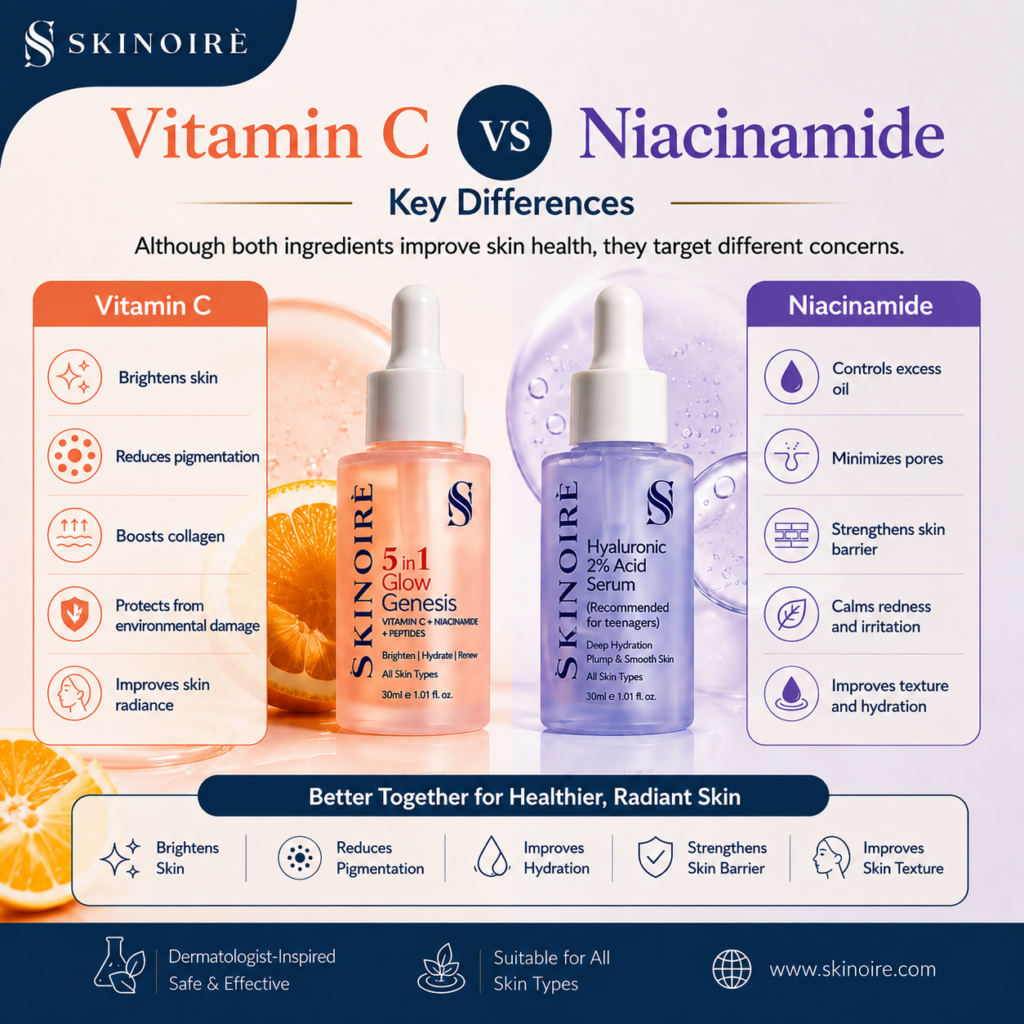
Although both ingredients improve skin health, they target different concerns.
Vitamin C | Niacinamide |
Brightens skin | Controls excess oil |
Reduces pigmentation | Minimizes pores |
Boosts collagen | Strengthens skin barrier |
Protects from environmental damage | Calms redness and irritation |
Improves skin radiance | Improves texture and hydration |
Instead of competing with each other, these ingredients complement one another and can be part of a similar skincare routine.
If your main issues are post-acne marks, sun damage, or uneven pigmentation, Vitamin C is generally the better choice. Its antioxidant properties assists brighten the complexion while slowly and gradually fading discoloration.
However, Niacinamide also helps improve uneven skin tone over time, making the collection of both ingredients even more efficient for sustainable outcomes.
Niacinamide is often suggested for oily and acne-prone skin because it helps control sebum production and facilitates a healthier skin barrier.
Vitamin C can still benefit acne-prone skin by lowering post-inflammatory pigmentation and increasing skin brightness after breakouts have healed.
Dry skin benefits from both ingredients in multiple ways.
Vitamin C helps increase skin radiance and supports collagen production, while Niacinamide strengthens the skin barrier and reduces moisture loss.
For ideal results, pair these ingredients with a hydrating serum that locks moisture into the skin.
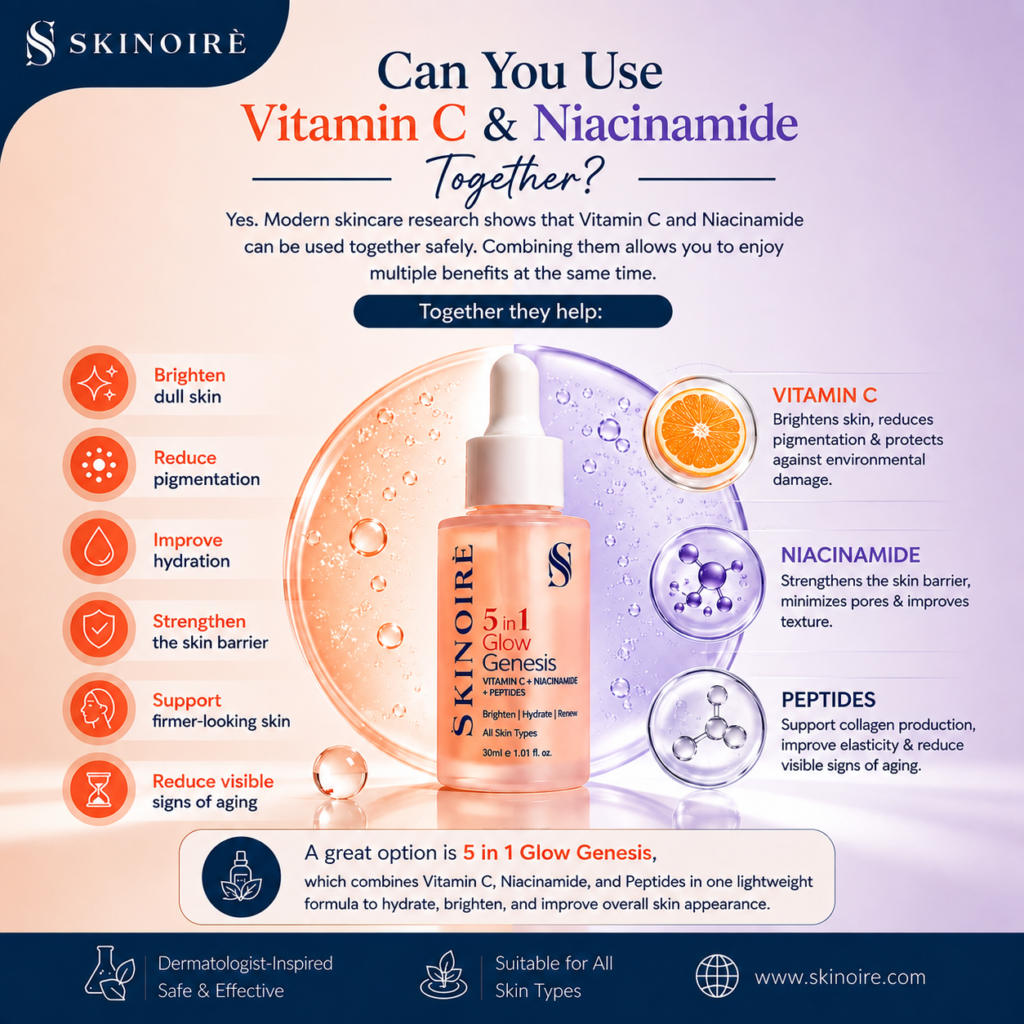
Yes. Modern skincare research shows that Vitamin C and Niacinamide can be used together safely. In fact, combining them allows you to enjoy multiple benefits at the same time.
Together they help:
A great option is 5 in 1 Glow Genesis, which combines Vitamin C, Niacinamide, and Peptides in one lightweight formula to hydrate, brighten, and improve overall skin appearance.
Choosing a serum relies on your skin type and skincare objetives.
Before choosing any active ingredient, it’s necessary to understand how to choose the right face serum for your skin type, issues, and daily routine.
The answer depends on your skin concerns.
Choose Vitamin C if you want:
Choose Niacinamide if you want:
If you’re looking for an all-in-one solution, a serum containing both ingredients can deliver comprehensive skincare benefits without complicating your routine.
Yes. They work well together and help brighten skin, improve texture, strengthen the skin barrier, and reduce dark spots.
Vitamin C is generally more effective for fading pigmentation, while Niacinamide helps even out skin tone and supports long-term skin health.
Yes. Niacinamide helps regulate excess oil production, minimizes pores, and supports acne-prone skin.
Vitamin C is commonly applied in the morning under sunscreen to help protect the skin from environmental damage.
Yes. Most people can safely introduce both ingredients into their routine gradually, especially when using well-formulated skincare products.
There isn’t a single winner in the Vitamin C vs Niacinamide debate because both ingredients offer unique benefits. Vitamin C excels at brightening and reducing pigmentation, while Niacinamide strengthens the skin barrier, controls oil, and improves overall skin texture. Used together, they create a balanced skincare routine that supports healthier, smoother, and more radiant skin.