What Is the Difference Between Sunscreen and Sunblock?
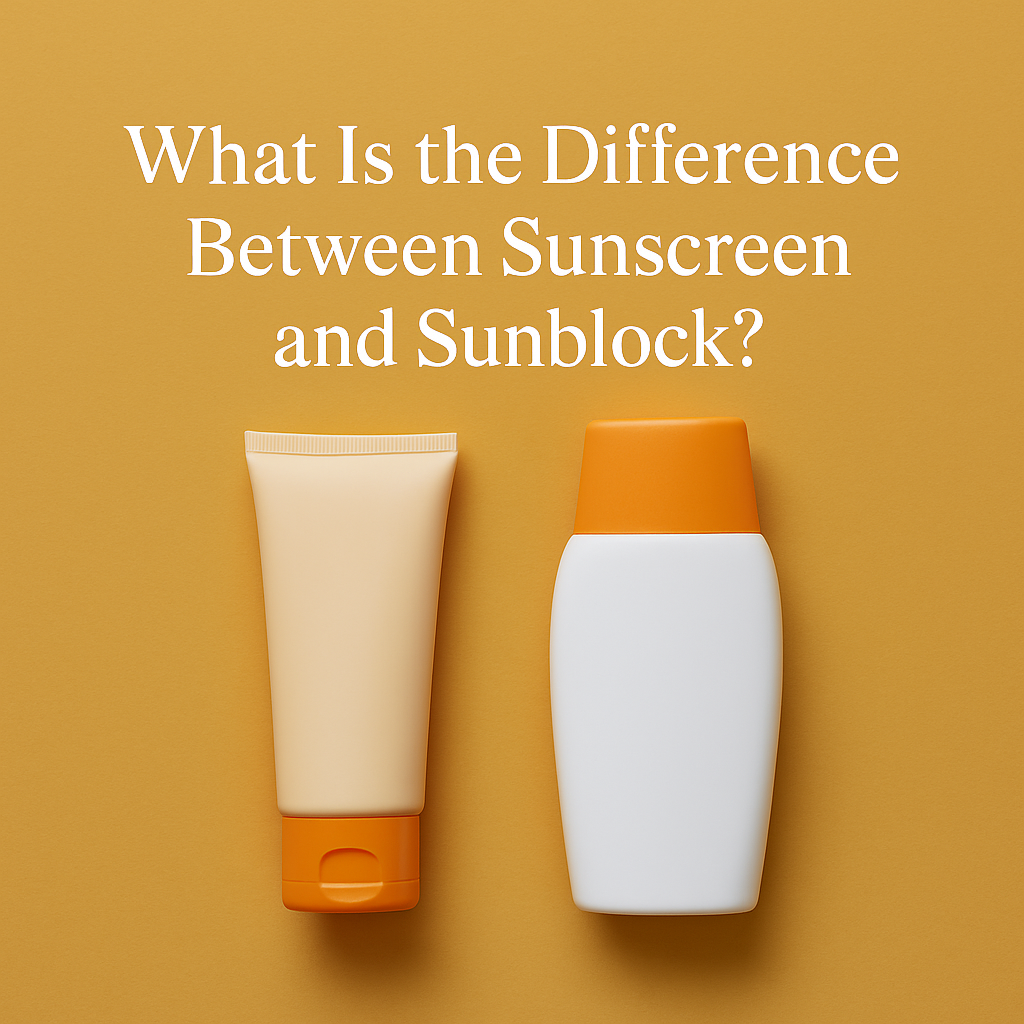
Most people use the words “sunscreen” and “sunblock” interchangeably, but they’re not the same. The difference between sunscreen and sunblock goes beyond just texture or finish. They work in completely different ways, contain different ingredients, and suit different skin types. Understanding how each works helps you choose what actually protects your skin best.
Sunscreen vs Sunblock: What’s the Difference?
Sunscreen works by absorbing UV rays before they harm your skin. It contains chemical filters that react with sunlight and turn those harmful rays into harmless heat. This process happens within the top layer of your skin, so the radiation never gets deep enough to cause damage. Because of this, sunscreen feels light, smooth, and invisible, which is why it’s preferred for daily use and layering under makeup.
Sunblock, on the other hand, protects from the outside. It creates a thin, physical layer on your skin’s surface that blocks and reflects sunlight away. Imagine holding a small mirror that bounces the light off before it touches your skin. That’s how sunblock works. Since it stays on top, it’s often thicker in texture and may leave a slight white layer, but it gives strong protection right after you apply it, making it perfect for people with sensitive skin or long outdoor exposure.
How Each Works Against UV Rays
UV rays come in two main types: UVA and UVB.
UVA rays go deep into the skin and cause premature aging, wrinkles, and dark spots. UVB rays affect the surface and are responsible for sunburns. Both can lead to long-term damage if you skip protection. That’s why your sunscreen or sunblock should always say “broad-spectrum”, meaning it shields you from both UVA and UVB rays.
Sunscreen, also called a chemical protector, works by absorbing UV rays before they harm your skin. It forms a lightweight layer that soaks up sunlight and turns it into harmless heat. It takes about 15 to 20 minutes after application to start working, so it’s best to apply it before leaving home.
Sunblock, or a physical protector, starts working right away. It uses natural minerals like zinc oxide and titanium dioxide to reflect and scatter sunlight off your skin, similar to how a mirror bounces light. Because it doesn’t need time to activate, it’s ideal when you need instant protection.
If you prefer something light and invisible, choose a sunscreen. But if your skin is sensitive, prone to redness, or you’ll be outdoors for hours, a sunblock is more reliable and stable under strong sunlight.
Ingredient Breakdown: What’s Inside?
The type of UV filters in a product determines how it works and how your skin reacts to it.
Sunscreen Ingredients (Chemical Filters)
Chemical sunscreens use active ingredients like avobenzone, oxybenzone, octocrylene, or homosalate. They spread easily and don’t leave residue, which is why many brands make them in gel-based sunscreen or fluid textures. These are great as sunscreen for men or for anyone who dislikes sticky or heavy creams.
But not all chemical filters are perfect. Oxybenzone and octinoxate have been linked to irritation in sensitive skin and are banned in some countries due to coral reef harm. Safer options now use Tinosorb S, Uvinul A Plus, or Mexoryl SX – newer filters that last longer and are gentler on skin.
Sunblock Ingredients (Mineral Filters)
Sunblocks rely on zinc oxide and titanium dioxide. These minerals sit on top of the skin and reflect UV light. They’re ideal for babies, people with eczema, or anyone allergic to synthetic ingredients.
Newer formulations use micronized or nano-sized zinc particles that blend better and don’t leave the old-style white cast. Some tinted sunblocks even out your complexion while protecting you, making them great for daily wear.
Choosing Between Sunscreen and Sunblock
There is no single best option for everyone. The right choice depends on your skin type, how long you spend outdoors, and the weather around you. The main goal is to find something that feels comfortable and that you can use every day without skipping.
Sunscreen for Oily Skin
If your skin becomes greasy or shiny easily, choose a gel-based sunscreen or an oil-free formula labeled non-comedogenic, which means it does not clog pores. These sunscreens feel light, dry fast, and leave a smooth finish.
Look for ingredients such as niacinamide, green tea extract, or silica. They help control excess oil while keeping your skin hydrated. A helpful routine is to apply your gel sunscreen after moisturizer and before makeup or heading outdoors. It keeps your skin fresh and matte throughout the day.
Avoid heavy creams or stick sunscreens if you have oily or acne-prone skin because they can block pores and cause breakouts.
Sunscreen Cream for Dry Skin
If your skin often feels tight or rough, go for a sunscreen cream that doubles as a moisturizer. Cream-based sunblocks with hyaluronic acid, ceramides, or shea butter keep your skin soft while protecting it from UV rays. These are best for dry or cold weather.
After cleansing your face, apply moisturizer and then your sunscreen cream to lock in hydration. Stay away from alcohol-based or matte-finish sunscreens since they can remove your skin’s natural oils and increase dryness.
If your skin is both dry and sensitive, a mineral sunblock with zinc oxide is a gentle and reliable option. It forms a thin layer on your skin that reflects sunlight and keeps moisture in.
Sunscreen vs Sunblock: Which Is Better?
The “sunblock vs sunscreen which is better” debate has no universal answer.Both protect your skin well, but the right choice depends on your lifestyle and environment.
If you spend most of your time indoors or in the city, a lightweight sunscreen is enough. It absorbs quickly, feels smooth on the skin, and works well under makeup. This type is great for daily use when you move between sunlight and shade or sit near windows for long hours.
If you plan to stay outdoors for several hours, like at the beach, hiking, or sports, a sunblock offers stronger protection. It forms a physical layer that stays stable even under direct sunlight and sweat.
Always check the label for “Broad Spectrum SPF 30 or higher.” This ensures your product protects from both UVA (aging) and UVB (burning) rays. Reapply every two hours or after swimming or heavy sweating to maintain protection.
For acne-prone skin, choose a mineral or hybrid sunscreen made with zinc oxide or titanium dioxide. These sit gently on the skin and reduce the risk of clogged pores or irritation. If you have a darker skin tone, try tinted sunscreens or sunblocks. They blend naturally and avoid the white film that some mineral products leave behind.
Tips for Better Sun Protection
Most people don’t get full protection from sunscreen because they don’t use enough. To cover your face and neck properly, use about two fingers’ length of sunscreen. Apply it 15 to 20 minutes before stepping outside so it can settle into your skin. Always reapply every two to three hours, and sooner if you sweat or swim.
Don’t miss spots like your ears, hairline, back of the neck, and hands, these areas often get sun damage first but are easy to overlook.
You still need sunscreen even when you stay indoors. UVA rays can pass through windows and cause dark spots and early aging, especially if you sit near sunlight or spend long hours in front of screens.
One helpful tip is to store your sunscreen in a cool, shaded place. Heat can break down the active ingredients and reduce its SPF strength. Keeping it away from direct sunlight makes it last longer and stay effective.
Common Myths About Sunscreen and Sunblock
Myth 1: You don’t need sunscreen if you’re indoors
This is one of the biggest mistakes. UVB rays cause sunburns and are blocked by glass, but UVA rays can pass through windows. UVA is responsible for wrinkles, pigmentation, and premature aging, which means you still need sunscreen even when you’re inside your home, car, or office. Indoor light from screens and bulbs can also add to long-term skin damage.
Myth 2: Darker skin tones don’t need sun protection
People with deeper skin tones have more melanin, which gives natural protection against burns, but not against UVA damage. Without sunscreen, darker skin can still develop hyperpigmentation, uneven tone, and early signs of aging. Everyone, regardless of skin color, benefits from using broad-spectrum SPF 30 or higher every day.
Myth 3: SPF 100 gives double protection compared to SPF 50
It sounds logical, but it’s misleading. SPF 50 blocks about 98 percent of UVB rays, while SPF 100 blocks about 99 percent. The difference is very small. What truly matters is how much and how often you apply it. If you don’t reapply every two hours, even SPF 100 won’t protect you properly.
Myth 4: Sunscreen causes acne
Sunscreen only causes breakouts when the formula doesn’t suit your skin type. If you have oily or acne-prone skin, choose a gel-based sunscreen or one labeled oil-free and non-comedogenic. These don’t clog pores or feel heavy. Ingredients like niacinamide or green tea extract can even calm irritation and help reduce acne marks while protecting your skin.
Myth 5: One application lasts all day
Sunscreen protection wears off with sweat, sebum, and friction from towels or clothes. To stay protected, reapply every two hours, or sooner if you swim or sweat a lot. A helpful tip is to keep a small sunscreen tube or spray in your bag or car so you never forget.
Final Thoughts
The difference between sunscreen and sunblock comes down to how they work and what your skin needs. Sunscreen absorbs rays; sunblock reflects them. Both are important, but consistency is what truly keeps your skin safe and youthful.
If you’re outdoors often, choose broad-spectrum, benzene-free protection that suits your skin type. For oily skin, lightweight gel sunscreens are your best friend. For dry skin, hydrating sunblock creams keep moisture sealed in.
Looking for all-day hydration and sun protection in one step? Try Skinoire’s Golden Glint (SPF Plus Moisturizer). With SPF 60+ PA+++ and Vitamin E, it keeps your skin protected, soft, and fresh without feeling greasy. Perfect for every skin type, even oily and sensitive ones.